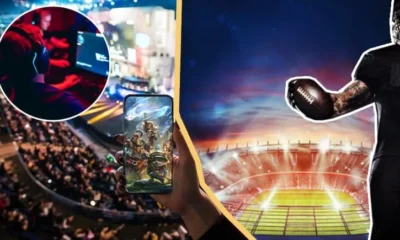
How Online Gaming and Betting Keep Influencing Each Other

Online gaming used to be its own universe. Betting platforms were another. Different audiences, different ideas of fun, different cultures entirely.
But over the last ten years, something interesting has happened. The lines blurred.
Not because one tried to copy the other, but because players started expecting the same things from both worlds: faster experiences, cleaner interfaces, and moments that feel tense in the best way.
You can see this shift almost everywhere. Modern games use systems that look suspiciously like betting patterns and it is not to replicate them, but because they tap into the same psychology of risk and reward.
And betting platforms like Betway mw now borrow the presentation styles of mainstream games, not to make them look like arcades, but to make them feel familiar to people who grew up with controllers in their hands.
Gaming Borrowed the Thrill Curve

Source: globalbrandsmagazine.com
One of the clearest overlaps is the way both spaces use pacing. Online games used to rely on long campaigns and hours of progression.
Now many of the most popular titles revolve around short, tense loops: moments that demand quick choices and offer quick outcomes.
That’s the same emotional curve that makes competitive environments exciting. A small decision, a sudden shift, a payoff that arrives within seconds.
Players enjoy that shape because it mirrors the real-time anticipation they experience in sports or competitions.
The key difference is context. In gaming, the thrill is built around mechanics. In betting, it’s built around real-world events.
Betting Platforms Learned the Value of Flow
Older betting sites used to feel like spreadsheets. Numbers everywhere, blinking updates, very little personality.
As online gaming became more visual and more user-friendly, betting platforms responded by reinventing their own design language.
Interfaces became cleaner. Animations got smoother. Information was organised in a way that matched the instinctive flow of modern games.
Instead of forcing users to dig through menus, platforms began presenting information in layers, the same way a video game surfaces difficulty, objectives, and loadouts.
This wasn’t about style for the sake of style. It was about understanding how players read screens now.
Games taught an entire generation how to navigate digital spaces. Betting platforms adapted so they could be understood instantly.
Shared Spaces Make New Behaviours
The overlap between online gaming and the betting world has created new communities too.
Not communities built around wagering, but around reacting, discussing and following matches in the same frantic, real-time way that gamers follow esports.
People gather in group chats or forums the same way gamers once gathered after big updates.
They break down momentum shifts, argue about strategies, and share predictions the way players debate patch notes.
It’s less about the outcome and more about the story unfolding on the screen.
That crossover has created a culture where knowledge, statistics, and observation matter as much as excitement.
Following a sport now looks a lot more like following a competitive game: fans track data, study player roles, and think in terms of timing.
The Future Will Likely Blend Even More

Source: thisismoney.co.uk
As digital entertainment keeps changing, gaming and betting will continue borrowing ideas from each other as not in ways that turn one into the other, but in ways that refine how both function.
Games are expected to deliver tension in moments, not hours. Betting platforms are expected to feel sleek, intuitive and responsive.
Both are expected to offer clean design, clear information, and the sense that the user is steering their own experience.
What’s happening now isn’t a merger. It’s a conversation. Two industries, shaped by the same generation of players, quietly influencing one another.
They evolve, borrow, refine, and adjust it all because people expect their digital worlds to feel fast, smooth and meaningful, no matter what they’re doing on the screen.